Disco Grupa muzyczna & Artysta muzyczny Lista
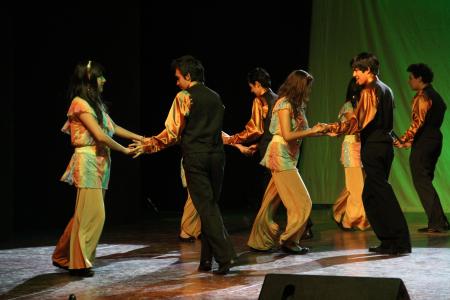
Disco is a genre of dance music and a subculture that emerged in the late 1960s from the United States' urban nightlife scene, particularly in African-American, Italian-American, Latino and queer communities. Its sound is typified by four-on-the-floor beats, syncopated basslines, string sections, brass and horns, electric pianos, synthesizers, and electric rhythm guitars.
Discothèques as a venue were mostly a French invention, imported to the United States with the opening of Le Club, a members-only restaurant and nightclub located at 416 East 55th Street in Manhattan, by French expatriate Olivier Coquelin, on New Year's Eve 1960.
Disco music as a genre started as a mixture of music from venues popular among African Americans, Latino Americans, and Italian Americans in New York City (especially Brooklyn) and Philadelphia during the late 1960s to the mid-to-late 1970s. Disco can be seen as a reaction by the 1960s counterculture to both the dominance of rock music and the stigmatization of dance music at the time. Several dance styles were developed during the period of '70s disco's popularity in the United States, including "the Bump", "the Hustle", "the Watergate", "the Continental", and "the Busstop".
During the 1970s, disco music was developed further, mainly by artists from the United States as well as from Europe. While performers garnered public attention, record producers working behind the scenes played an important role in developing the genre. By the late 1970s, most major U.S. cities had thriving disco club scenes, and DJs would mix dance records at clubs such as Studio 54 in Manhattan, a venue popular among celebrities. Nightclub-goers often wore expensive, extravagant outfits, consisting predominantly of loose, flowing pants or dresses for ease of movement while dancing. There was also a thriving drug subculture in the disco scene, particularly for drugs that would enhance the experience of dancing to the loud music and the flashing lights, such as cocaine and quaaludes, the latter being so common in disco subculture that they were nicknamed "disco biscuits". Disco clubs were also associated with promiscuity as a reflection of the sexual revolution of this era in popular history. Films such as Saturday Night Fever (1977) and Thank God It's Friday (1978) contributed to disco's mainstream popularity.
Disco declined as a major trend in popular music in the United States following the infamous Disco Demolition Night on July 12, 1979, and it continued to sharply decline in popularity in the U.S. during the early 1980s; however, it remained popular in Italy and some European countries throughout the 1980s, and during this time also started becoming trendy in places elsewhere including India and the Middle East, where aspects of disco were blended with regional folk styles such as ghazals and belly dancing. Disco would eventually become a key influence in the development of electronic dance music, house music, hip-hop, new wave, dance-punk, and post-disco. The style has had several revivals since the 1990s, and the influence of disco remains strong across American and European pop music. A revival has been underway since the early 2010s, coming to great popularity in the early 2020s. Modern day artists have continued the genre's popularity, bringing it to a whole new younger generation.
Czytaj więcej...





Zasady Głosowania
- Możesz głosować w górę lub w dół. Należy zawsze brać pod uwagę kontekst, podczas głosowania, np.piosenka powinna być głosowana w górę lub w dół w stosunku do innych utworów zawartych na płycie, aktora wydajności w porównaniu z innymi podmiotami w tym samym filmie, książce w odniesieniu do innych książek tego samego autora lub w ramach tego samego gatunku.
- Głosowanie może być anulowane, po prostu klikając przeciwny głos w ciągu 24 godzin. Następnie można głosować ponownie na tej samej pozycji.
- Każdy użytkownik posiada jeden głos za przesyłkę w określonym wykazie co 24 godziny. Po 24 godzinach można głosować ponownie na tej samej pozycji, w ramach tej samej listy.
- Możesz głosować na jak najwięcej przedmiotów, jak chcesz w liście lub w tej samej pozycji, jeśli jest częścią innej listy. Na przykład, można głosować David Bowie w górę lub w dół na liście artystów muzyki pop, a także na liście indie artystów rockowych i na liście muzyki rockowej artystów itp.
- Szczęśliwy Głosowanie!